Gluten-free pasta and glycemic index: what really matters (and how to choose better)
If you chose gluten-free pasta thinking you were automatically making a lighter choice for blood sugar, you’re not alone. It’s a very common misconception, fueled by years of confusing marketing and a certain tendency to conflate two distinct concepts: the absence of gluten and glycemic response control.
The reality is more nuanced—and more interesting. Gluten-free pasta and glycemic index are topics that intertwine, but not always in the way we expect. In this article you’ll discover what really influences your blood sugar curve when you eat gluten-free pasta, how to read labels to make more informed choices, and which combinations help you keep blood sugar under control without giving up the pleasure of a good plate of pasta.
Gluten-free doesn’t mean low glycemic index: the misconception to debunk
The glycemic index (GI) measures how quickly a food raises blood sugar after consumption. A high GI means a rapid glucose spike; a low GI indicates a more gradual release and, generally, a more balanced metabolic response.
Gluten itself does not lower the glycemic index of foods. Its absence, therefore, is in no way synonymous with “safe for blood sugar.”
What really matters is the composition of the food:
- The carbohydrate source used
- The fiber and protein content
- The degree of processing
- The physical structure of the food
Many commercially available gluten-free pastas are made with refined rice or corn flours, which have a glycemic index even higher than traditional durum wheat pasta. In some cases, the GI of a supermarket gluten-free pasta can exceed 70-80, placing it in the high glycemic index range.
This doesn’t mean all gluten-free pasta should be avoided—far from it. It means you need to choose more carefully.
What really influences the glycemic response of gluten-free pasta?
Ingredients make the difference
The first element to analyze is the ingredient list. The flours used decisively determine the glycemic impact of the final product.
High-GI flours (use in moderation or in combination):
- White rice flour
- Finely refined corn flour
- Tapioca, potato, rice, or corn starch
Lower-GI flours (preferable or look for on labels):
- Buckwheat flour (rich in fiber and protein)
- Legume flours (chickpea, lentil, pea): high protein content
- Quinoa flour: complete amino acid profile
- Whole grain corn or rice flours (less refined, more fiber)
- Spices or herbs (can help slow absorption)
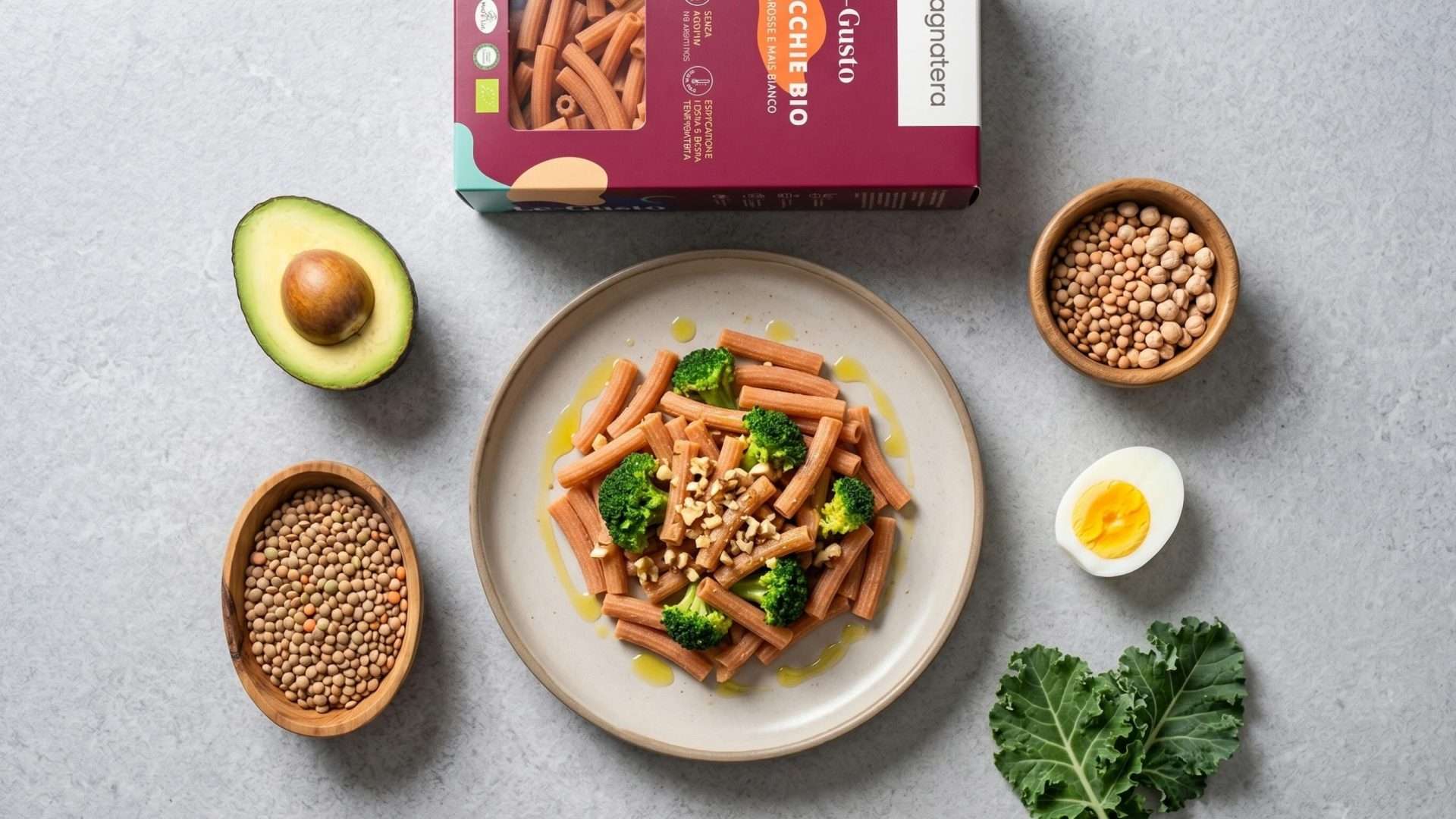
Magnatera products, for example, are formulated with natural alternative flours, non-GMO and often organic, without added starches or additives that can accelerate digestion. This results in a more favorable glycemic profile compared to many industrial alternatives. [link to magnatera.com/prodotti]
Fiber and protein: your metabolic allies
Fiber slows the digestion and absorption of carbohydrates, helping to dampen the glycemic spike. Every extra gram of fiber in your pasta means a flatter blood sugar curve.
Protein acts similarly: it slows gastric emptying and reduces the speed at which glucose enters the bloodstream.
Look for products that have:
- At least 3-4 g of fiber per 100 g
- A protein content above 8-10 g per 100 g (especially if using legume or quinoa flours)
These values are found in the nutrition table on the label—a reading habit worth cultivating.
Pasta shape matters (really)
Long or short pasta? Thick or thin? It’s not just a matter of aesthetics or pairing with sauce.
The shape influences the surface area in contact with digestive juices and, therefore, the speed of digestion:
- Thicker shapes (pappardelle, rigatoni, paccheri) are digested more slowly
- Thin and small shapes (spaghettini, pastina) tend to have faster absorption
Additionally, the compact and porous structure of artisanal pasta promotes slower digestion compared to industrial pastas produced with high-temperature processes.
Cooking changes everything: al dente is better (and not just for taste)
Why al dente pasta has a lower GI
Cooking pasta al dente isn’t just a matter of Italian culinary tradition—it has a real impact on glycemic index.
When pasta is cooked al dente, the starch inside is still partially crystallized (resistant form) and requires more work from digestive enzymes to be broken down. The result is a slower release of glucose into the blood.
Overcooked pasta, on the other hand, has completely gelatinized starch, much easier to digest and with a significantly higher GI.
Practical tip: remove the pasta from the water one or two minutes before the time indicated on the package and let it finish cooking directly in the pan with the sauce.
Cooling and reheating: resistant starch
Here’s something that surprises many people: cooked pasta that has been cooled has a lower GI than pasta eaten immediately.
Why? During cooling, part of the starch undergoes a process called retrogradation, becoming resistant starch—a form that the body cannot digest quickly and that behaves similarly to dietary fiber.
This means that leftover pasta from the day before, reheated in a pan, can have a lower glycemic impact than the same freshly cooked pasta. Useful, right?
Smart pairings to stabilize blood sugar
Pasta is never eaten alone. And the pairings you choose can make a huge difference in the glycemic curve of your meal.
Combinations that lower glycemic response
Pasta + quality protein:
- Legumes (beans, lentils, chickpeas): also as an ingredient in the pasta itself
- Fish (tuna, salmon, mackerel): rich in omega-3 and protein
- Eggs (in cold pasta or as a topping)
- Tofu or tempeh for those following a vegan diet
Pasta + healthy fats:
- Extra virgin olive oil (use raw, at the end of cooking)
- Avocado, walnuts, pine nuts: slow carbohydrate absorption
- Pesto (oil, nuts, cheese, or nutritional yeast): classic pairing with excellent metabolic profile
Pasta + high-fiber vegetables:
- Zucchini, broccoli, spinach, eggplant
- Fresh tomatoes (lycopene and fiber)
- Kale, chard, asparagus
Common mistakes that worsen blood sugar even with gluten-free pasta
Choosing the right pasta isn’t enough if you make these mistakes:
- Topping with very sugary sauces (industrial tomato sauce, all industrial sauces often containing sugar): drastically increase the glycemic load of the meal
- Pairing bread (both traditional and gluten-free) with the same meal: double load of refined carbohydrates
- Eating very large portions without considering the total glycemic load
- Overcooking the pasta, completely gelatinizing the starch
- Not including vegetables or protein in the dish, leaving carbohydrates “alone”
- Drinking fruit juices or sugary beverages during the meal has a very powerful synergistic effect on raising blood sugar
How to read the gluten-free pasta label
The information that really matters
When you’re at the supermarket or shopping online, here’s what to focus on:
Ingredient list (in order of quantity):
- The first ingredient is the one present in the greatest quantity
- Avoid products where modified starches or ultra-refined flours appear as main ingredients
- Look for whole grain, organic flours and a variety of different flours—varying and diversifying is recommended.
Nutrition table per 100 g:
- Total carbohydrates and sugars (the closer sugars are to 0, the better)
- Fiber: the more, the better
- Protein: at least 7-10 g per 100 g is a good sign
- Absence of additives, emulsifiers, colorants
Certifications:
- Ministry Seal
- Organic (Bio) for quality of raw materials
- Non-GMO
Magnatera products stand out precisely for ingredient transparency: no additives, no added sugar, only natural and certified raw materials.
Did you know? Curiosities and frequently asked questions
Does rice pasta always have a high GI?
Not necessarily. Whole grain or semi-whole grain rice pasta has a lower GI than refined white rice pasta. But keep in mind that al dente cooking and pairings greatly affect the final result.
Is legume pasta really more filling?
Yes. Pastas made from lentils, chickpeas, or peas have much higher protein and fiber content than grain-based pastas. This translates to greater satiety and a slower glycemic response.
Is gluten-free pasta suitable even for those who aren’t celiac?
Yes, as long as it’s quality. Gluten-free pasta isn’t inherently better or worse than traditional pasta: it depends on the ingredients. A gluten-free pasta with natural flours, rich in fiber and protein, can be an excellent choice even for those without intolerances—in fact, it may even help prevent their onset over time.
How much gluten-free pasta can you eat with high blood sugar?
There’s no universal answer, as it depends on many individual factors. Generally, guidelines suggest portions of 60-80 g of dry pasta, always paired with protein and vegetables and cooked al dente. Consulting a dietitian or diabetologist is always the best choice when metabolic issues are present.
Is buckwheat really low GI?
Yes. Buckwheat (technically not a grain but a pseudocereal) has a glycemic index around 40-50, significantly lower than many refined flours. It’s also rich in rutin, a flavonoid that contributes to cardiovascular health.
Gluten-free pasta and healthy lifestyle: an informed choice
Choosing gluten-free pasta for health reasons—whether due to celiac disease, gluten sensitivity, or simply wanting to eat more consciously—is a choice that can be fully compatible with good glycemic control.
The key isn’t eliminating pasta, but choosing the right one and eating it the right way.
With growing attention to metabolic health and ingredient quality, consumers are increasingly informed and demanding. Producers who respond with transparency, natural ingredients, and well-balanced recipes—like Magnatera—offer a concrete answer to this demand for quality.
Eating gluten-free pasta consciously means:
- Choosing products with natural and mixed flours
- Cooking al dente and pairing intelligently
- Reading labels instead of relying on claims highlighted on the package
- Considering pasta as part of a balanced meal, not as a food to isolate
Conclusion: choose consciously, eat with pleasure
Gluten-free pasta and glycemic index are closely connected topics, but the relationship between the two depends on many factors for which you now possess the evaluation tools: ingredients, cooking, shape, pairings, and portions.
“Gluten-free” is not an automatic guarantee of metabolic health. But with the right information, it can become a truly better choice—for taste, for health, and for daily well-being.
If you’re ready to discover a gluten-free pasta that combines natural ingredients, authentic taste, and certified Made in Italy quality, we’re waiting for you at magnatera.com.
Explore the complete range of Magnatera pastas, discover recipes, and choose the shapes that suit you: from buckwheat pasta to tagliatelle with legume flours, every product is designed to offer you the best without compromise.
Visit magnatera.com and discover your ideal gluten-free pasta.