

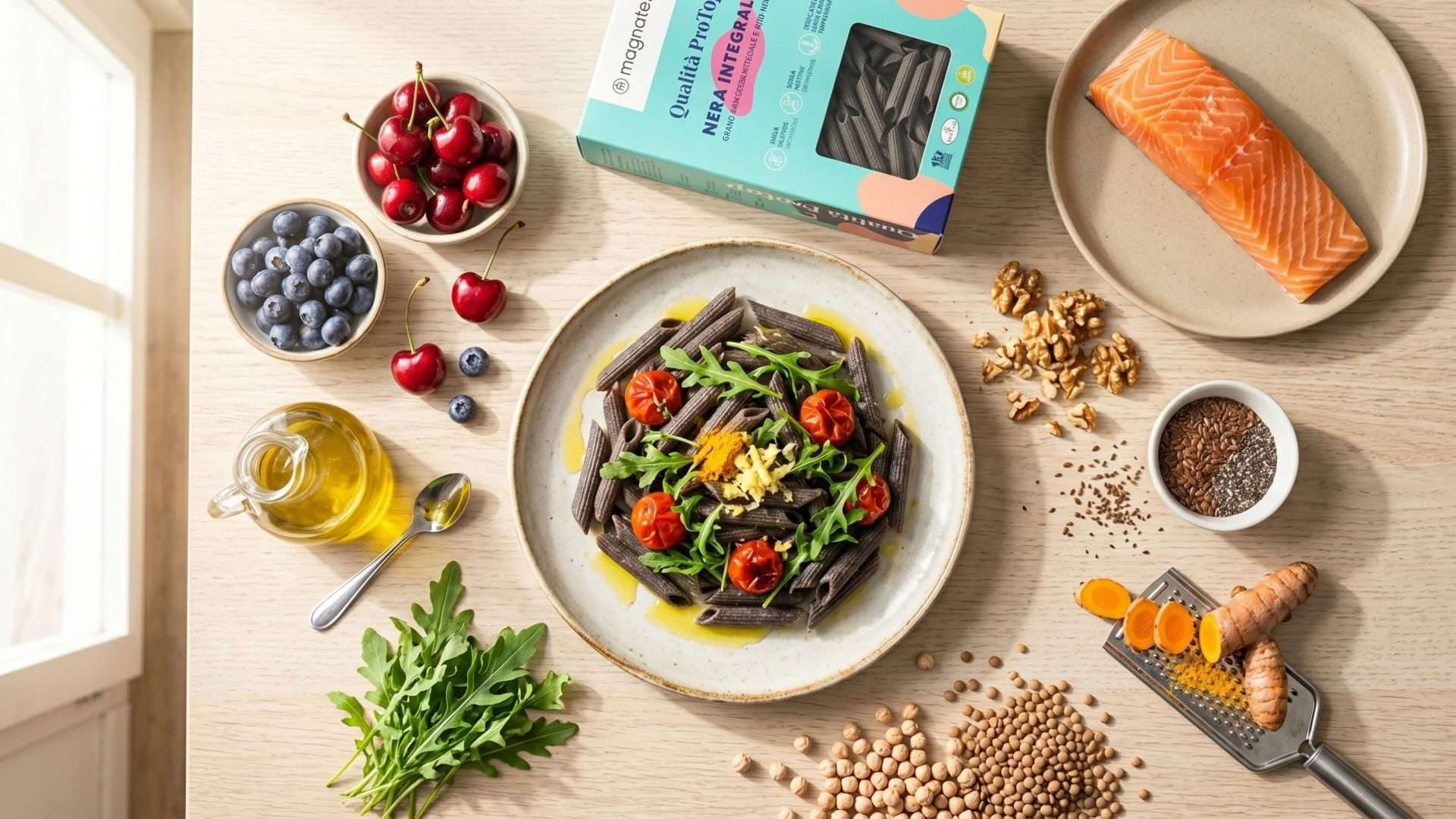
Anti-inflammatory Foods for Joint Well-being: What to Eat to Reduce Pain
Have you ever felt “heavy” joints in the morning, or a persistent discomfort in your knees or shoulders that you just can’t shake off? Often, the answer isn’t just in the medicine cabinet: it’s also on your plate. Anti-inflammatory foods play a fundamental role in supporting joint well-being, and scientific research confirms this with increasing clarity.
In this article, you’ll discover which foods are most effective at reducing inflammation, how to build a daily diet that helps your joints, and why even your choice of pasta — yes, that’s right — can make a difference.
Why inflammation is the enemy of your joints
Before talking about food, it’s helpful to understand the mechanism. Chronic low-grade inflammation is one of the main factors involved in conditions like rheumatoid arthritis, osteoarthritis, tendonitis, and lipedema. Unlike acute inflammation — the kind that activates to heal a wound — chronic inflammation acts silently over time, wearing down cartilage, joint tissues, and connective tissues.
According to recent research published in Verywell Health, there are at least ten categories of foods capable of actively supporting joint health, reducing inflammatory markers in the blood and protecting the cartilage structure.
The role of diet in systemic inflammation
What we eat every day directly influences the levels of pro-inflammatory cytokines, such as interleukin-6 and TNF-alpha. A diet rich in refined sugars, saturated fats, and ultra-processed foods tends to increase these markers.
Conversely, a diet based on whole foods, rich in antioxidants, omega-3s, and polyphenols, helps keep systemic inflammation under control — and with it, joint pain.
The 10 most effective anti-inflammatory foods for joints
Here is a practical guide to the foods you should regularly include in your diet if you want to protect your joints and reduce inflammatory pain.
1. Oily fish rich in Omega-3
Salmon, mackerel, sardines, and anchovies are among the most powerful allies against joint inflammation. The omega-3 fatty acids (EPA and DHA) contained in these fish have been shown to reduce morning stiffness and swelling in people with rheumatoid arthritis.
Practical tip: Consume at least two servings a week, preferably steamed or baked to preserve their properties.
2. Extra virgin olive oil
Oleocanthal, a compound found in high-quality EVO oil, has an action similar to ibuprofen in blocking the enzymes involved in inflammation. It’s no coincidence that the Mediterranean diet — rich in olive oil — is associated with a lower incidence of chronic inflammatory diseases.
Use it raw on vegetables, pasta, or whole-grain bread to maximize its benefits.
3. Berries and cherries
Blueberries, strawberries, blackberries, raspberries, and cherries contain anthocyanins, powerful antioxidants that neutralize the free radicals responsible for joint damage. Some studies have highlighted that regular consumption of cherries reduces uric acid levels, which is linked to gout attacks.
- Add them to yogurt or morning smoothies
- Use them fresh or frozen (nutritional properties are preserved)
- Choose organic ones to avoid pesticide residues
4. Dark green leafy vegetables
Spinach, kale, chard, and arugula are rich in vitamin K, folic acid, and magnesium — all nutrients that contribute to bone health and inflammation control. Vitamin K in particular is essential for the synthesis of the protein osteocalcin, which is fundamental for bone mineralization.
5. Turmeric and ginger
These two roots are perhaps the most famous natural anti-inflammatories in the Ayurvedic tradition, now also confirmed by Western medicine.
Curcumin (the active ingredient in turmeric) inhibits the NF-κB factor, a key molecule in inflammatory processes. Ginger, for its part, contains gingerols and shogaols that reduce the production of prostaglandins, substances involved in pain and swelling.
How to use them: Add turmeric and black pepper (to increase absorption) to soups, risottos, and sauces. Fresh ginger is great in herbal teas or grated over vegetable dishes.
6. Nuts and seeds
Walnuts, flax seeds, chia seeds, and hemp seeds are excellent plant sources of omega-3 (alpha-linolenic acid), but they also contain vitamin E — a fat-soluble antioxidant that protects cell membranes from oxidative stress.
A small handful a day is enough to benefit from their properties.
7. Legumes
Beans, lentils, chickpeas, and peas provide high-quality plant proteins, prebiotic fibers, and polyphenols. Dietary fibers support the gut microbiome, and a healthy gut is closely linked to lower levels of systemic inflammation.
They are also naturally gluten-free — an important detail for those suffering from celiac disease or non-celiac gluten sensitivity.
8. Broccoli and cruciferous vegetables
Broccoli, cauliflower, Brussels sprouts, and baby Brussels sprouts contain sulforaphane, a compound that blocks an enzyme involved in the degradation of joint cartilage. A study published in Arthritis & Rheumatology suggested that a diet rich in cruciferous vegetables could slow the progression of osteoarthritis.
9. Citrus fruits and Vitamin C
Oranges, lemons, grapefruits, and kiwis are among the richest sources of vitamin C, which is indispensable for collagen synthesis — the main structural protein of cartilage. A vitamin C deficiency can compromise the body’s ability to repair damaged joint tissues.
10. Whole Grains and Alternative Flours
This point deserves special focus. Oats, spelt, brown rice, buckwheat, and quinoa are grains and pseudo-grains rich in fiber, B vitamins, and antioxidant compounds. Unlike refined grains, they don’t cause high glycemic spikes — one of the main triggers of inflammation.
For those who are celiac or gluten-intolerant, opting for high-quality gluten-free pasta — made from corn, rice, buckwheat, quinoa, or legume flours — is not just a necessity, but also a nutritional opportunity that should not only be considered but included as a first choice.
How to build a daily anti-inflammatory diet
Knowing individual foods is only the first step. Real effectiveness is achieved when these foods become part of a balanced and consistent diet.
The anti-inflammatory Mediterranean diet model
The Mediterranean diet remains, according to scientific literature, one of the most effective dietary models in the prevention and management of chronic inflammatory diseases. Its pillars are:
- Extra virgin olive oil as the main fat
- Abundance of vegetables, fruits, legumes, and whole grains
- Regular consumption of oily fish (at least 2-3 times a week)
- Reduction of red meats and ultra-processed foods
- Fermented dairy products (yogurt, kefir) to nourish the gut microbiota
What to Avoid to Not Fuel Inflammation
Equally important is knowing what to remove or reduce from your diet:
- Added sugars and sugary drinks: they increase insulin levels and promote inflammation
- Trans fats and refined vegetable oils: they promote the production of pro-inflammatory eicosanoids
- Ultra-processed foods: rich in additives, preservatives, and ingredients that alter the microbiome
- Excess alcohol: increases intestinal permeability, favoring the entry of endotoxins into the bloodstream
The Role of Gluten in Inflammation
For people with celiac disease, gluten is a direct cause of intestinal and systemic inflammation. But even those suffering from non-celiac gluten sensitivity can benefit from a gluten-free diet, reducing bloating, chronic fatigue, and joint pain often associated with this condition.
Eliminating gluten from the diet, in these cases, is not just a choice for digestive health: it’s a full-fledged anti-inflammatory strategy.
Gluten-free pasta and inflammation: why ingredient quality matters
If you’re following an anti-inflammatory diet, pasta doesn’t have to disappear from your plate — but it has to be the right kind.
Many gluten-free pastas on the market are produced with refined starches, thickeners, and additives that can compromise the glycemic response and offer no nutritional advantage. The choice of ingredients makes all the difference.
Anti-inflammatory ingredients: Buckwheat, Quinoa, and Legumes
- Buckwheat: rich in rutin, a flavonoid with anti-inflammatory and antioxidant action. It also contains magnesium, useful for muscle and joint health.
- Quinoa: a gluten-free pseudo-grain with a complete amino acid profile and interesting antioxidant properties.
- Legume flours (chickpeas, lentils, peas): high protein content and soluble fibers that support the microbiome.
A pasta produced with these flours, without additives or added sugars, fits perfectly into a diet designed to reduce inflammation and support joint well-being.
Frequently asked questions about anti-inflammatory foods and joint well-being
What are the most anti-inflammatory foods overall?
The most powerful foods in this sense are oily fish (thanks to omega-3s), turmeric (for curcumin), berries (anthocyanins), extra virgin olive oil (oleocanthal), and legumes (prebiotic fibers).
How long does it take to see the benefits of an anti-inflammatory diet?
Generally, improvements in joint stiffness and overall energy are felt after 4-8 weeks of consistent eating. For inflammatory markers in the blood, such as CRP, it may take 2-3 months.
Is pasta bad for your joints?
Not in itself. The problem is refined pasta and poor-quality raw materials that promote pro-inflammatory insulin spikes. A whole-grain pasta or one based on alternative flours (buckwheat, legumes, quinoa), without additives, is instead compatible with an anti-inflammatory diet.
Can someone with celiac disease follow an anti-inflammatory diet?
Absolutely yes. In fact, for celiacs, eliminating gluten is the first and most important anti-inflammatory step. The important thing is to choose quality gluten-free foods, free of additives and based on natural flours; reducing gluten is nonetheless beneficial even for non-celiacs who want to reduce systemic inflammation.
Do collagen supplements help joints?
Some studies suggest benefits, but dietary collagen can also be obtained from bone broths, edible gelatin, and indirectly from an adequate intake of vitamin C (which stimulates endogenous collagen synthesis).
Did You Know That…
🌿 Turmeric must be paired with black pepper to boost its absorption by the body. The piperine in pepper increases the bioavailability of curcumin by up to 2000%.
🐟 Sardines are an excellent and affordable source of omega-3, calcium, and vitamin D — all essential nutrients for joint health.
🌾 Buckwheat is not a grain and does not contain gluten. It is botanically related to rhubarb and quinoa, and is one of the foods with the most interesting antioxidant profile among alternative flours.
🫘 Freshly cooked legumes are more nutritious than canned ones, but even preserved versions (rinsed) maintain most of their fiber and protein; for the correct absorption of the plant proteins they contain, they should be consumed accompanied by a grain.
Conclusion: eat mindfully, move lightly
Reducing inflammation is not a matter of miracle diets or drastic sacrifices. It is the result of daily, small, and conscious choices that accumulate over time.
Regularly including oily fish, colorful vegetables, legumes, fresh fruit, olive oil, and unrefined grains means building a dietary armor that protects your joints from the inside — without side effects, without drugs, and often with a lot of flavor.
If you are celiac, gluten-intolerant, or simply careful about what you put on your plate, choosing a quality gluten-free pasta — produced with natural, organic flours and without additives — is a concrete step towards a more anti-inflammatory diet.
Discover Magnatera gluten-free pasta
Magnatera is the gluten-free pasta line from Pastificio Pangea, artisanally produced in Veneto with natural, non-GMO, and often organic raw materials. No additives, no added sugar, no dyes: only selected flours of corn, rice, buckwheat, quinoa, and legumes, processed with care to ensure it holds its shape during cooking and has an authentically Italian taste.
If you want to bring to the table a pasta that respects your well-being and that of those you love, visit magnatera.com and discover all the available shapes — from penne to fusilli, from tagliatelle to pappardelle, up to the most innovative recipes with herbs, spices, and essential oils.
Your plate can be the first anti-inflammatory gesture of the day. Start here.


