Anti-inflammatory diet
You’ve heard of the anti-inflammatory diet at least once in the past few months.
Maybe from a doctor, maybe on Instagram, maybe from a friend who has “changed everything” by eliminating gluten or eating only “purple” foods. The problem? A mountain of hooey, expensive products and incomprehensible rules that lead nowhere has been built around this concept.
The truth is simpler-and more powerful. The anti-inflammatory diet is not a secret list of superfoods or a regimen to be followed for 30 days. It is a way of eating, every day, that your body understands and appreciates and builds on. In this article we give you a concrete map: from the supermarket cart to the plate.
What is Chronic Low Grade Inflammation (and why you should know about it)
Before we talk about food, let’s talk about biology. In a simple way.
When you get a cut, the body reacts: redness, heat, swelling. It is acute inflammation, the body’s defense system. It does its job and then it passes. The problem arises when this response never goes away completely.
Chronic low-grade inflammation is a kind of always-on, silent alarm that produces no obvious immediate symptoms but, over time, damages tissues. The most recent studies-including reviews published in journals such as The Lancet and Nature Medicine-associate it with:
- Metabolic syndrome and type 2 diabetes
- Cardiovascular disease
- Overweight and difficulty losing weight
- Chronic fatigue and mental fog
- Some forms of arthritis and joint pain
- Lipedema
How is it measured? The most common marker is C-reactive protein (CRP), a simple blood test. But many people with PCR in the normal range still live with subclinical inflammation that manifests over the long term.
What triggers it? Among the main factors: stress, smoking, sedentary lifestyle, poor sleep and-yes-the wrong diet. But right nutrition can also contribute to turning it off.
There is no “Magic List”: anti-inflammatory nutrition is a Pattern
This is the point that changes everything. There is no single food that saves you, nor one that dooms you. Looking for the “list of 10 anti-inflammatory foods” is the fastest way to waste time.
What matters is the overall eating pattern: the set of foods you choose week after week.
Scientific research is quite clear on what characterizes an anti-inflammatory diet:
More of these:
- Colored vegetables and greens (each color = different bioactive molecules)
- Fresh and seasonal fruits
- Legumes (lentils, chickpeas, beans, peas)
- Fish, especially fatty fish (salmon, sardines, mackerel, anchovies)
- Whole grains and pseudocereals (oats, spelt, brown rice, quinoa, buckwheat)
- Dried fruits and oil seeds (walnuts, almonds, flax and chia seeds)
- Extra virgin olive oil
- Herbs and spices (turmeric, ginger, rosemary, oregano)
Less than these:
- Ultra-processed foods (snacks, packaged snacks, ready meals with dozens of ingredients)
- Added sugars and sugary drinks
- Trans fats and refined oils
- Processed meats (sausages, industrial sliced meats in large quantities)
- Gluten
- Excess alcohol
It’s not about eliminating whole categories. It’s about shifting the balance.
The most solid model: why the Mediterranean style works
It is not marketing, it is not nostalgia, it is not fashion. The Mediterranean diet is the most studied dietary pattern in the world in relation to cardiovascular and metabolic health and longevity. And it is because, looking at its composition, it almost perfectly matches the anti-inflammatory profile we have described.
After decades of research, the scientific consensus is solid: the PREDIMED study, analyses from the Harvard School of Public Health, and systematic reviews from the Cochrane confirm that following a Mediterranean dietary style measurably reduces inflammatory markers and chronic disease risk.
But why does it work?
Not because of a single ingredient, but because of the synergy between all of them:
- EVO oil as the main fat → polyphenols and oleocanthal with documented anti-inflammatory effect
- Plenty of vegetables → vitamins, minerals, and prebiotic fibers that nourish the gut microbiota (the “second brain” of the immune system)
- Regular legumes → plant protein, soluble fiber, low glycemic index
- Fish at least 2 times a week → omega-3 EPA and DHA, among the most powerful regulators of inflammation
- Cereals preferably whole grain or low refined → more stable glycemic response
- Spices and herbs → polyphenol concentrates with antioxidant effect
The Mediterranean diet is not a diet. It is a way of experiencing food, of sociality and of the land. And it is replicable even if you don’t live on the Mediterranean.
How to read labels: recognizing quality (and Empty Marketing)
We arrive at the supermarket. This is where the game is won or lost.
The problem? Shelves full of products that scream “natural,” “healthy,” “organic,” “whole grain,” “gluten-free”-but inside hide ingredients far from an anti-inflammatory profile.
How to read a label in 30 seconds:
The ingredient list reads in descending order of quantity. The first ingredient is the one present in the largest quantity. If the first or second ingredient is sugar, glucose-fructose syrup or a refined vegetable oil, you can already get your bearings: it is unlikely to be good for you!
Quality signals:
- Few ingredients (3-6 are a good sign)
- Recognizable and pronounceable ingredients
- Research the declaration of absence of thickeners, dyes, artificial flavors, preservatives
- Presence of whole grain flours preferably gluten-free (buckwheat, rice, corn, quinoa, legumes)
Signs of “healthy marketing” not to be fooled:
- “Fat-free” → often compensated with more sugar
- “Zero added sugars” → may contain sweeteners or natural fructose in high amounts
- “Fiber source” → check how much: if it is less than 3g per serving, it is irrelevant
- “Whole wheat” in the foreground but 0 flour as the first ingredient → classic trick
A concrete example? Compare two gluten-free pastas:
- Pasta A: Ingredients: corn flour, rice flour, water. Finish. (from organic farming)
- Paste B: corn starch, rice flour, dextrose, thickeners (E412, E415), salt, flavorings.
The first is clean label. The second is an ultra-processed product disguised as healthy pasta.
Magnatera, the gluten-free pasta from Pastificio Pangea, was born out of exactly this philosophy: simple, natural ingredients with no additives and no marketing tricks. Each format-from penne to fusilli, tagliatelle to pappardelle-uses non-GMO, often organic raw materials, with flours made from corn, rice, buckwheat, quinoa, legumes, and even spices and herbs. An anti-inflammatory choice already in ingredient number one.
The Anti-Inflammatory Dish Formula
Theory okay. But at the time of cooking, how is it done concretely?
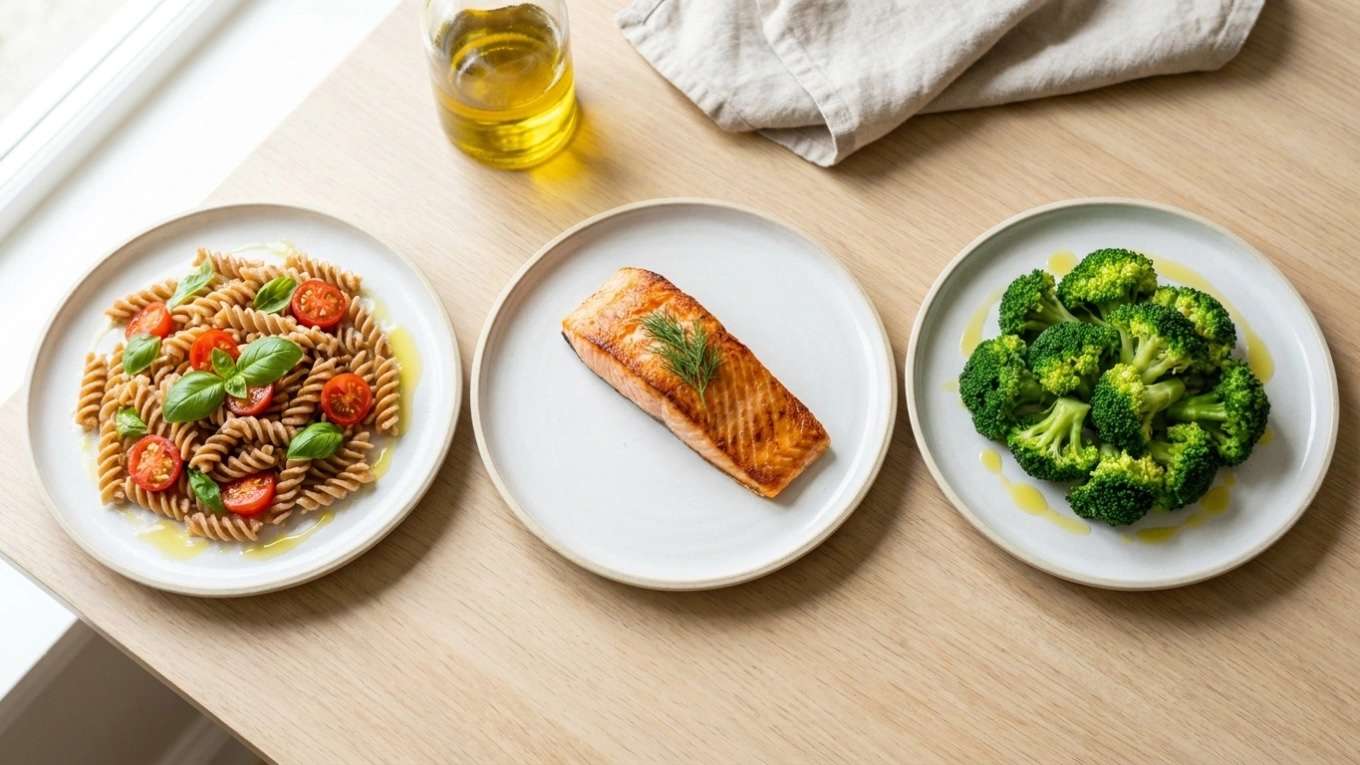
Here is a simple, visual scheme that you can apply to every main meal, Monday through Sunday, without becoming a nutritionist.
½ Vegetables
Half of the plate-or nearly half-must be occupied by vegetables. Fresh, cooked, raw, in soup, as a side dish. It matters the quantity and quality; and that they are cooked without too many additions (e.g., béchamel, stringy cheeses, fried batters…). More variety of colors = more variety of polyphenols and fiber.
Practical examples: sautéed spinach, steamed broccoli, raw carrots, pumpkin soup, mixed salad, roasted peppers.
¼ “Clean” Protein
A quarter of the plate devoted to quality protein, with little associated inflammation:
- Fish (especially oily fish: mackerel, sardines, anchovies, wild salmon)
- Legumes (lentils, chickpeas, black beans, cannellini beans)
- Free-range eggs
- Chicken and turkey (preferably not intensively raised)
- Tofu, tempeh, edamame for those following a plant-based diet
¼ Quality Carbohydrates
The other quarter: carbohydrates that release energy gradually and do not beat up the glycemic index.
- Whole grains (brown rice, spelt, oats, barley)
- Pseudocereals (quinoa, buckwheat, amaranth)
- Legumes
- Tubers (sweet potatoes, new potatoes with skin)
- Quality gluten-free pasta (buckwheat, legumes, organic corn and rice)
Good Fats (don’t forget them)
They are not an “add if space is left over” category. They are essential:
- Extra virgin olive oil: basic condiment, raw or for short cooking
- Dried fruits: walnuts (very rich in plant omega-3s), almonds, pistachios
- Seeds: flax, chia, hemp, sunflower (organic and unroasted)
- Avocado (fatty fruit par excellence, rich in monounsaturated fats)
“7 Days” Checklist: 7 Sustainable Micro-Changes.
You don’t have to turn everything upside down in one day. Eating habits are built one brick at a time. Here are 7 concrete actions, one for each day of the week, to start right away.
Day 1 – A handful of nuts instead of packaged snacks
Nuts are among the foods with the most documented anti-inflammatory profile. A small bag to keep in your purse or office.
Day 2 – Add a serving of legumes
Lentils in a soup, chickpeas in a salad, hummus as a dip. Legumes are the most accessible vegetable protein source.
Day 3 – Bring fatty fish to the table
Grilled fresh sardines, pan-fried mackerel, anchovies in oil. A 150g serving twice a week is the target. Start today.
Day 4 – Read the label of a product you often buy
Just one. Count the ingredients. Recognize what it says. You’ll be amazed.
Day 5 – Replace a refined carbohydrate with a whole grain one
Whole wheat pasta, brown rice, rye bread. Gluten-free versions with quality flours (buckwheat, quinoa, legumes) are also great.
Day 6 – Add turmeric or ginger to a dish
A grinding of black pepper with turmeric increases its absorption. Start with a teaspoonful in yogurt, rice or vegetables.
Day 7 – Build a meal according to the plate formula
½ vegetables, ¼ protein, ¼ good carbs, a drizzle of EVO oil. One meal, one habit. Then repeat.
Bonus Day 8 – Start reducing sugar The sugar we add to Coffee, tea, herbal teas, cakes, yugurt, pancakes, breakfast granola…if eliminated or reduced will make you discover the true flavor of foods, enjoy them and reduce glycemic spikes and the consecutive onset of appetite.
Frequently Asked Questions about the Anti-Inflammatory Diet.
Is pasta bad for an anti-inflammatory diet?
Not if it is quality. Whole wheat or alternative pastas (buckwheat, legumes, quinoa, organic corn and rice) have a lower glycemic index than refined pasta and fit perfectly into an anti-inflammatory pattern. The problem is not the pasta: it is the quality of the ingredients and the quantity on the plate. Preferring gluten-free will make you appreciate the lightness more and have even less inflammatory power.
How many times a week should I eat fish?
The most up-to-date guidelines indicate at least 2-3 servings of fish per week, favoring oily fish rich in omega-3s. Canned versions (sardines, mackerel, tuna) are also good if in EVO oil or plain.
Is the anti-inflammatory diet also suitable for those with celiac disease?
Absolutely. In fact, for people with celiac disease or gluten sensitivity, choosing naturally gluten-free, quality foods-such as legumes, rice, quinoa, buckwheat, corn, gluten-free pasta with simple ingredients-is already a concrete anti-inflammatory step because it eliminates a source of immune system stimulation.
Should I eliminate sugar completely?
Eliminating it would be optimal, but if you can’t, even just reducing it will immediately positively impact your body. The goal is not perfection but proportionality. The natural sugars in whole fruit, with all the associated fiber, are very different from the added sugar in industrial products. Start by reducing sugary drinks-it is the main source.
How long does it take to see results?
It is not a drug treatment, so there are no immediate effects to expect. Studies such as PREDIMED show significant benefits on inflammatory markers within 3-6 months of consistent feeding. But already within a few weeks many people report improvements in energy, sleep quality, and digestion.
In summary
The anti-inflammatory diet is not a fad, not a list of superfoods, not yet another regimen to follow for 21 days. It is a way to build your meals every day, starting with ingredient choices (real, simple and nutritious) and lifestyle choices (no smoking, no alcohol, no sedentary life).
The Mediterranean model gives you the base. The plate formula gives you the structure. The 7-day checklist gives you the starting point.
Every ingredient counts. Every choice at the supermarket is a vote for your future well-being.
If you are looking for gluten-free pasta that respects this philosophy-simple ingredients, organic and non-GMO raw materials, no additives or tricks-discover Pastificio Pangea’s Magnatera formats. A pasta designed for those who want to eat really well, not just on the label.
Visit magnatera.com and discover the full line of 100% Made in Italy gluten-free pasta: from buckwheat to quinoa, legumes to herbs. Your next anti-inflammatory dish starts here.