Gluten-Free Diet: The Secret to Better Living
(and Eat Delicious Pasta)
In a world increasingly concerned with wellness and the quality of what we bring to the table, the phrase “gluten-free diet” has become part of our everyday vocabulary. But it is not just a passing trend. For millions of people it is a necessity, for many others a conscious choice toward a healthier, more energetic lifestyle. If you’ve ever wondered how to start a gluten-free journey without giving up the taste, and especially the pleasure of a good pasta dish, you’ve come to the right place.
This is not yet another article that will list you only prohibitions and renunciations. Here are pointers for turning the gluten-free diet into an opportunity: a chance to discover new flavors, pure ingredients, and wellness that starts in the gut. And yes, we’ll even let you in on the secret to finding a gluten-free pasta that not only holds up to cooking, but can compete on equal terms with the best traditional pasta. Get ready to revolutionize your pantry and your palate.
Gluten-Free Diet: Much More Than a Fashion
Before delving into the practical aspects, it is essential to understand what we are talking about. The approach to gluten-free changes dramatically when dictated by a medical diagnosis or a personal wellness choice, but the benefits can surprise anyone.
What is gluten and why avoid it?
Gluten is a protein complex found in some grains such as wheat, spelt, kamut, barley, rye and spelt. It is the substance that gives elasticity and texture to doughs, making bread soft and dough tough.
For some people, however, this component is a real enemy.
- Celiac disease: This is a chronic autoimmune disease in which the ingestion of gluten triggers an immune reaction that damages the intestinal villi, impairing nutrient absorption. For people with celiac disease, a gluten-free, aglutinated diet is the only existing treatment.
- Non-Celiac Gluten Sensitivity (NCGS): Many people, while not celiac, experience bothersome symptoms after consuming gluten: abdominal bloating, headaches, fatigue, and intestinal discomfort. In these cases, eliminating or reducing it can lead to a significant improvement in quality of life.
The Proven Benefits of a Gluten-Free Diet.
Adopting a gluten-free diet, especially one based on naturally free foods and high-quality products, can lead to numerous benefits, even for those without specific diagnoses:
- Improved digestion: Reduction of bloating, cramping and bowel irregularity.
- Increased energy levels: A healthier gut absorbs nutrients better, combating feelings of exhaustion.
- Increased mental clarity: Many report a decrease in so-called “cognitive fog.”
- Healthier skin: Problems such as acne, eczema or dermatitis can improve by eliminating gluten, a potential inflammatory agent.
- Exploration of new foods: The need to avoid wheat prompts the discovery of a world of alternative grains, legumes and vegetables, enriching one’s diet.
The first step may seem the most difficult: what can I eat? The good news is that nature offers an endless variety of delicious and naturally gluten-free foods.
The “Yes” Foods: Your New Shopping List.
Focus on what you can eat, and you will see your diet become richer and more varied.
- Cereals and pseudocereals: Rice, corn, buckwheat, millet, quinoa, amaranth, sorghum, oats.
- Legumes: Lentils, beans, chickpeas, peas, soybeans (and all their derivatives such as tofu).
- Fruits and vegetables: All of them, without exception. They are the basis of a healthy diet.
- Meat, fish and eggs: Naturally gluten-free protein foods. Beware only of preparations (e.g., breaded cutlets).
- Dairy products: Milk, natural yogurt, fresh and aged cheeses.
- Nuts and oil seeds: Walnuts, almonds, chia seeds, flax seeds.
The “No” Foods: Where does gluten hide?
A little more care is needed here, because gluten can be found even where you don’t expect it.
- Prohibited grains: Wheat (wheat), spelt, kamut, barley, rye and their derivatives (bread, pasta, pizza, cookies, couscous).
- Baked goods: Most traditional ones. Always look for the “gluten-free” label.
- Beer: Produced primarily from barley. Gluten-free alternatives exist.
- Processed foods: Gluten is often used as a thickener in sauces, ready-made sauces, canned soups, bouillon cubes, and even some cured meats.
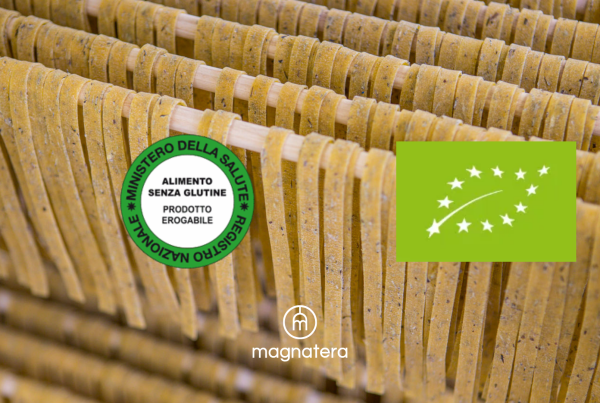
The ministerial seal: Your guarantee of safety
For people with celiac disease, absolute certainty is essential. Always look for the ministerial seal , a notification that guarantees the absence of gluten and control over the supply chain to avoid contamination, on packaged products. Or the “GLUTEN-FREE” statement printed on the package.
Gluten Free Pasta: How to choose the best one for taste and tightness
Let’s get to the heart of Italian cuisine: pasta. For years, the gluten-free version has been synonymous with a sticky texture, cardboard flavor, and a frustrating tendency to flake. Fortunately, the world of gluten-free pasta has experienced a real revolution, thanks to innovative companies like Magnatera.
Not all gluten-free pasta is the same: The importance of ingredients.
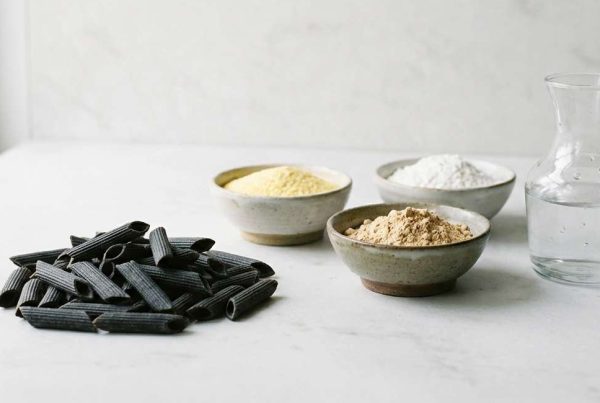
The secret of exceptional gluten-free pasta is not what is not there (gluten), but what is. Low-quality pasta is often made from only super-refined corn and rice flours, with the addition of additives, emulsifiers (such as mono diglycerides of fatty acids) and thickeners to “simulate” the structure of gluten.
A premium pasta, on the other hand, relies on a “clean label” philosophy: few ingredients, natural and recognizable. Just like Magnatera pasta, which is based on:
- 100% natural and non-GMO raw materials: often organic, for a clean and healthy product.
- Absence of additives: No emulsifiers, added sugar or dyes. Texture comes from the skillful mixing of flours and the manufacturing process.
- Slow low-temperature drying: An artisanal method that preserves the nutritional properties and authentic flavor of the raw materials, ensuring extraordinary hold during cooking.
A World of Flavors: From Legume Flours to Buckwheat
The most exciting innovation is the use of alternative flours that not only solve the gluten problem, but add nutritional value and a unique taste.
- Pasta with Corn and Rice Flour: The classic base, but when fine, whole-grain varieties are used, the flavor becomes richer and the texture perfect.
- Legume Pasta (red lentils, peas, chickpeas): Naturally rich in plant protein and fiber, it is satiating, nutritious and perfect for those on a vegan, vegetarian diet or for athletes.
- Buckwheat Pasta: Despite its name, it is not a grain and contains no gluten. It has a strong rustic flavor, rich in minerals such as magnesium, perfect for pairing with mushrooms, cheeses or winter vegetables.
- Flavored Pastas: Adding ingredients such as mushrooms, herbs, spices, or essential oils directly into the dough transforms a simple pasta dish into a gourmet experience, without the need for complex sauces.
The Trial by Fire: Tips for Perfect Cooking
Have you chosen a high quality pasta like Magnatera? Now don’t ruin it in cooking!
- Plenty of water: Use at least one liter of water for every 100 grams of pasta.
- Coarse salt: Add it only when the water boils vigorously.
- Cooking time: Respect the minutes indicated on the package. Taste a minute ahead to gauge the desired degree of cooking. Quality pastas do not shake easily.
- Drain, rinse and season: Drain the pasta, run it under lukewarm running water a few seconds to remove excess starch and pour it directly into the pan with the sauce, stirring for a minute. This will make it even more flavorful.
Integrating the gluten-free diet into family life: Managing a gluten-free diet in the family, especially with children, may seem like a challenge, but with a little organization it becomes a simple and tasty habit for everyone.
Tasty Meals for Everyone: Tips to Satisfy Even Children
The key is not to make it perceived as a “punitive” diet. Choosing a gluten-free pasta that has a pleasant taste and texture is the first step. Fun shapes such as fusilli or Magnatera penne, which pick up the sauce well, are always a hit. Involve children in preparing simple, colorful recipes, using ingredients they love. Soon they won’t even know the difference.
Kitchen organization: Avoiding cross-contamination
If you cook both with and without gluten at home, safety is paramount for those with celiac disease, so attention will need to be paid to certain aspects:
- Separate spaces: Use cutting boards, utensils and colander dedicated exclusively to gluten-free.
- Cleaning: Always clean work surfaces thoroughly before cooking gluten-free.
- Cooking: If you have to cook two types of pasta, use different pots and never mix the cooking water.
Frequently Asked Questions (FAQ) about the Gluten-Free Diet.
We answer some of the most common questions asked online and to voice assistants.
What is gluten and where is it found?
Gluten is a protein found in grains such as wheat, barley, and rye. It is found in bread, pasta, pizza, cookies and many industrial products where it is used as a thickener.
What are the benefits of a gluten-free diet for non-celiacs?
Many non-celiacs report a significant reduction in abdominal bloating, increased energy, improved digestion, and increased mental clarity. Recent studies, such as those published in reputable scientific journals, are delving into the mechanisms of non-celiac gluten sensitivity.
Does gluten-free pasta have fewer calories?
Not necessarily. Calories depend on the flours used. A corn and rice pasta has a similar calorie intake as a wheat pasta. However, a legume pasta, for the same calories, offers much more protein and fiber, increasing satiety.
How do you cook gluten-free pasta so that it doesn’t brown?
The trick is to choose a high quality pasta made with excellent raw materials and a slow drying process. These pastas, like those in the Magnatera line, have an excellent cooking hold, comparable to that of traditional pasta, and of course adhere to the times indicated on the package by tasting the pasta from time to time to check cooking always before draining.
Why choose a pasta with alternative flours such as legumes or buckwheat?
Because you turn a simple dish into a nutrient powerhouse. With legume pasta you increase your protein intake, with buckwheat pasta you fill up on minerals and fiber. It is the tastiest way to make your diet more varied, complete and functional for your well-being.
Your wellness choice begins at the table; embarking on a gluten-free diet does not mean saying goodbye to the pleasures of good food; on the contrary, it is an invitation to become a more conscious consumer, to read labels and to demand high-quality ingredients. It is a path that leads you to rediscover the authentic flavor of natural foods and to experiment with new and delicious combinations.
Pasta, a symbol of Italian conviviality, does not have to be a renunciation. By choosing an artisanal, Made in Italy and expertly formulated product, you can continue to enjoy one of the world’s most beloved dishes, with the assurance that you are nourishing your body in the best way possible.
Are you ready to turn your gluten-free diet into a gourmet experience? Discover the difference a pure ingredient can make. Visit magnatera.com and be won over by our selection of artisanal gluten-free pasta, 100% Made in Italy.
Your well-being will be grateful, and so will your palate.