

Gluten-free pasta: complete guide to choosing the best for taste and health.
The world of gluten-free pasta has exploded. While it was once a forced and often disappointing choice for a few, today it represents a universe of flavors, textures and nutritional benefits for all. But how to navigate an increasingly crowded shelf? Many still fear a pasta that shakes, tastes “cardboardy,” or is full of incomprehensible ingredients. The truth is that the revolution has already happened.
Choosing gluten-free pasta today no longer means giving up the pleasures of the table. On the contrary, it means discovering new tastes, embracing a healthier lifestyle and bringing to the table a product that can be as good, if not more interesting, than traditional pasta. This comprehensive guide will help you understand how to select the best gluten-free pasta for your needs, dispelling myths and revealing the secrets to a perfect dish every time.
Not all gluten-free pasta is the same: the importance of ingredients
The first step in making an informed choice is to look beyond the “gluten-free” label and focus on the heart of the product: its composition. A superior quality pasta can be recognized by a short, clear and clean label.
When you pick up a package of pasta, the list of ingredients is your treasure map. An excellent gluten-free pasta, like the one made with passion by Magnatera, relies on a few simple elements.
What to look for:
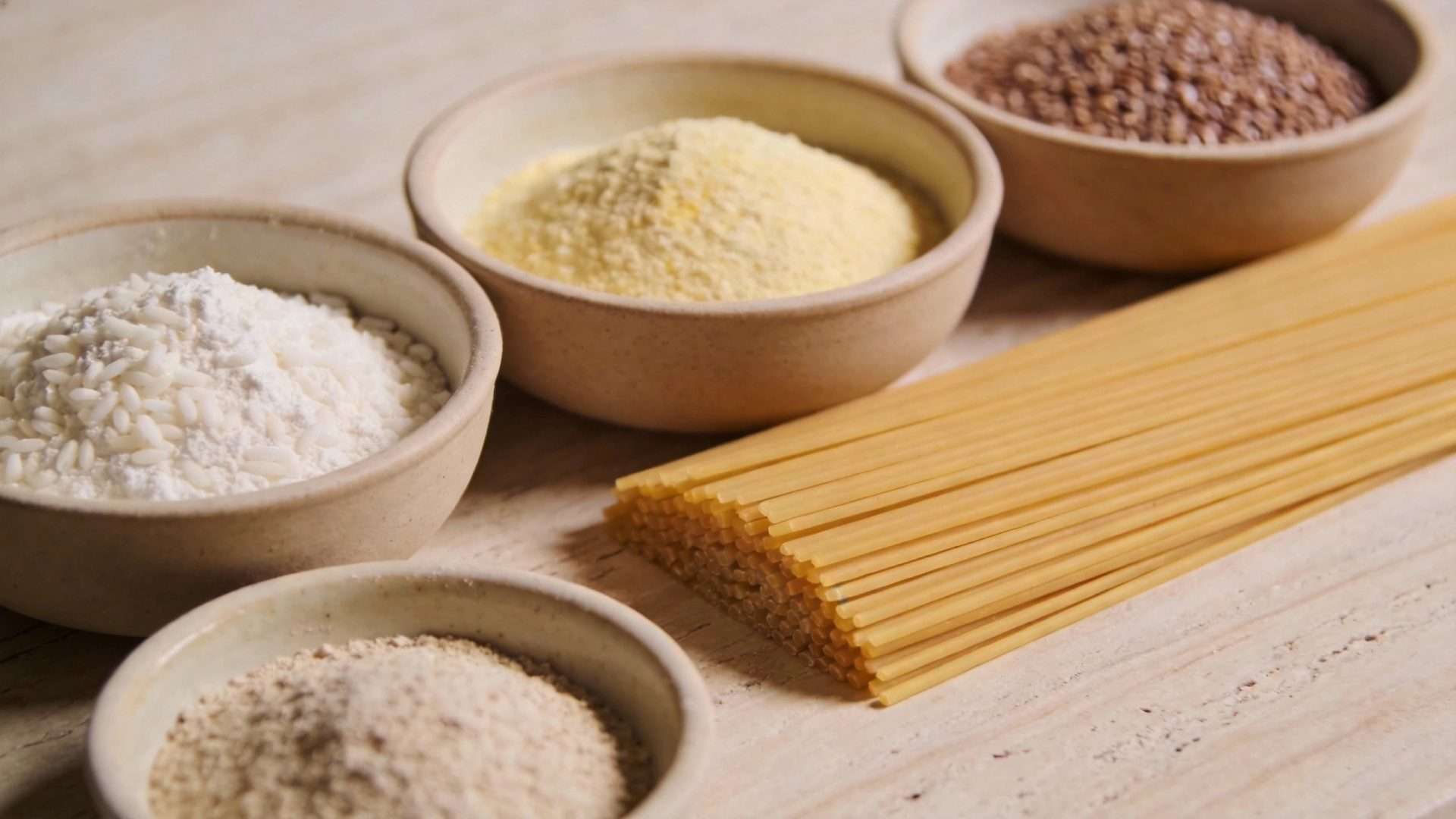
- Natural flours: Corn flour, rice flour (brown or white), buckwheat flour, legume flours (lentils, chickpeas, peas), quinoa.
- Simple ingredients: Water is often the only other ingredient needed.
- Value additions: Sometimes functional ingredients such as seaweed, spices, or herbs can be found that enrich the nutrient profile and taste in a natural way.
- Organic Certification: A plus that guarantees the absence of pesticides and synthetic chemicals.
What to avoid:
- Additives and thickeners: Xanthan gum, guar gum, mono and diglycerides of fatty acids (E471),starches, egg white powder. Often used in low-quality industrial pastas to “mimic” the function of gluten, they can weigh down the product and alter its flavor.
- Added sugars: There is no reason why a pasta should contain sugar. Always check for items such as “sugar,” “glucose syrup,” or the like.
- Artificial dyes and flavorings: A quality paste derives its color and flavor solely from the raw materials used.
The role of alternative flours:
The real richness of modern gluten-free pasta lies in the variety of flours. Each flour not only imparts a unique flavor, but also provides specific benefits.
- Corn and Rice: The most classic combination. It offers a delicate and neutral taste, very similar to that of durum wheat pasta, making it versatile for all kinds of toppings. It is the perfect base for those new to this world.
- Buckwheat: Despite its name, it is naturally gluten-free. It gives pasta a more rustic and assertive flavor with nutty notes. It is rich in fiber and antioxidants.
- Legumes (red lentils, chickpeas, peas): The “protein-packed” choice. This pasta has a much higher protein and fiber content, making it incredibly satiating and nutritious. It is perfect for athletes, vegans, and anyone who wants a complete, balanced meal.
- Quinoa, Flax, Black Rice: These ancient “pseudocereals” enrich pasta with a complete amino acid profile and a distinctive flavor, often with herbaceous or toasted hints.
A pasta like Magnatera, which experiments with innovative recipes by combining these flours, offers not just an alternative, but a whole new gastronomic experience.
Cooking Tightness and Flavor: Debunking a Myth
“Gluten-free pasta always shakes.” This is perhaps the most common and, today, the most untrue statement. A gluten-free pasta that becomes a shapeless mush on the plate is simply a low-quality pasta. Tightness in cooking depends on two crucial factors: the selection of raw materials and the production process.
Why do some gluten-free pastas shake? The secret is in the processing
Gluten is a protein that acts as a “glue,” creating a lattice that holds starch and gives pasta its typical elasticity and strength. In its absence, the quality of the pasta depends entirely on:
- Flour balance: A clever mix of flours with different properties (e.g., corn texture and rice starch) creates a balance that ensures tightness.
- Bronze wire drawing: This traditional method creates a rough, porous surface. During cooking, water penetrates more slowly and evenly, preventing the pasta from falling apart. The porous surface is also perfect for capturing all kinds of sauces.
- Slow drying at low temperatures: This process, which can take up to 24 hours, “crystallizes” the structure of the dough, stabilizing the starches. Industrial pastas, dried rapidly at high temperatures, become brittle and tend to release too much starch during cooking, resulting in sticky dough.
An artisanal pasta maker like Pangea, producer of Magnatera, takes maniacal care of these details, guaranteeing a product that does not fear comparison with the best traditional pasta.
Practical tips for perfect cooking
Even the best gluten-free pasta needs some extra care to express itself at its best. Follow these simple steps:
- Use plenty of water: At least one liter for every 100 grams of pasta. This helps dilute the released starch and cook evenly.
- Salt the water at the right time: Add coarse salt only when the water boils vigorously, just before you throw in the pasta.
- Stir immediately and gently: As soon as you pour in the pasta, give it a gentle stir to prevent it from sticking to the bottom. Repeat a few times during cooking.
- Taste a minute before: Adhere to the cooking time indicated on the package, but start tasting the pasta a minute before the recommended time. An “al dente” texture is the goal.
- Save some of the cooking water: It is an excellent natural binder for stirring pasta with sauce, thanks to the starch it contains.
- Rinse after draining : if you prefer a clean pasta without mantecatura.
By following these tricks, you will find that tightness in baking is no longer an issue.
A World of Flavors: Perfect Pairings for Your Innovative Pasta
Abandon the idea that gluten-free pasta goes only with a simple tomato sauce. The variety of flours opens up a world of creative and delicious combinations, perfect for surprising your guests or pampering yourself with a gourmet dish.
- Corn and Rice Pasta (e.g., Penne, Fusilli): Because of their neutral flavor, they are incredibly versatile. They are at their best with fresh, light sauces such as a basil pesto, a sauce of fresh cherry tomatoes and arugula, or sautéed vegetable and fish dressings.
- Buckwheat Pasta (e.g., Penne): Its rustic, enveloping flavor calls for robust seasonings. Try it with porcini mushrooms and parsley, a sausage ragout, or with flavorful cheeses such as taleggio and savoy cabbage for a gluten-free version of Valtellina pizzoccheri.
- Legume Pasta (e.g., Tagliolini and fusilli): Nutritious and flavorful, it goes great with vegetable sauces. Red lentil fusilli is perfect with a vegetable ragout of carrots, celery, and onion, while chickpea pasta goes beautifully with shrimp and zucchini or a roasted bell pepper cream.
- Special pastas (e.g., with Mediterranean herbs, pepper, ginger, lemon): Here creativity is a must; it is sublime with a sauce of clams, garlic, oil and chili. A ginger pasta a is enhanced with spicy vegetables such as curried cauliflower and coconut milk.
Gluten-Free Pasta for the Whole Family: Safety and Genuineness at the Table
Choosing a gluten-free diet is not just a matter of taste, but often a necessity related to the health and well-being of the whole family, from the oldest to the youngest.
Safety first: Celiac disease and gluten sensitivity
For those with celiac disease, the guarantee of an uncontaminated product is vital. It is not enough that the ingredients are gluten-free; the entire production process must take place in a dedicated environment to avoid any risk of cross-contamination.
Specialized and certified brands, such as Magnatera, offer this security. Always look for the “Ministerial Seal” symbol, issued by the Ministry of Health, on the packaging. This logo ensures that the product meets strict production and control standards, making it 100 percent safe for people with celiac disease. Relying on brands born with this vocation means putting your health in expert hands.
A healthy and tasty dish even for children
More and more families, even in the absence of disease, are choosing to vary their children’s diets with more natural and digestible products. A gluten-free pasta, if chosen well, is an excellent option.
Opt for “clean label” products, with no additives, emulsifiers or added sugars. Corn and rice pastas are generally the most popular with children because of their mild flavor. Legume pastas, on the other hand, are a clever way to incorporate protein and fiber into their diet, perhaps disguised with a tasty sauce they love. The key is to offer them as a fun and colorful alternative, not a deprivation.
Your Questions about Gluten-Free Pasta (FAQ)
We have collected some of the most common questions we receive about gluten-free pasta to answer your doubts clearly and directly.
What’s the best gluten-free pasta that doesn’t shake?
The best is that which is produced by hand, with high-quality flours, bronze drawing and slow drying.
These processes, typical of brands such as Magnatera, ensure a solid structure that resists cooking perfectly, remaining “al dente” at all times.
Is legume pasta healthier than regular pasta?
Nutritionally, yes. It contains significantly more protein and fiber, has a lower glycemic index and satiates longer. It is an excellent choice for a complete and balanced meal, especially for those on vegetarian, vegan or sports diets.
Is gluten-free pasta less fattening?
Not necessarily. Calories are often similar to those of wheat pasta. However, legume or whole grain versions, due to their high fiber and protein content, increase satiety, potentially leading to smaller portions and less eating overall.
How do you pair buckwheat pasta?
Its strong flavor goes well with autumn and mountain ingredients. Mushrooms, aged cheeses, vegetables such as chicory or Savoy cabbage, and flavorful meat ragouts are its ideal partners.
Are all gluten-free pastas also vegan?
Most do, since the basic ingredients are flour and water. However, always beware of stuffed pastas or any gluten-free egg pastas, which contain animal derivatives. A brand like Magnatera, which focuses on 100 percent plant-based ingredients, is also a guarantee for those on a vegan diet.
The journey into the world of gluten-free pasta is a journey of discovery. We have seen that quality is not an optional extra, but the fundamental element that distinguishes a mediocre product from excellence that can satisfy the most demanding palates.
Choosing consciously means reading labels, favoring natural ingredients and artisanal processes, and trusting those who have made gluten-free production a true art. It is no longer about finding a “substitute,” but about elevating the pasta experience to a new level of Made in Italy taste, wellness and quality.
Don’t settle for just any gluten-free pasta. Discover the difference that passion, natural ingredients and Italian tradition can make.
Visit magnatera.com and bring the true taste of pasta, naturally gluten-free, to the table.


