Gut microbiome and gluten-free diet: what science says
Attention to gut health, or “gut health,” is no longer a niche trend, but a mainstay of modern-day wellness. If you follow a gluten-free diet, either out of necessity or choice, you may have asked yourself: am I really doing the best for my body?
The answer today is more complex and fascinating than ever. Eliminating gluten is essential for those with celiac disease or sensitivity, but how does our delicate inner ecosystem, the gut microbiome, react to this change?
Recent scientific findings are revolutionizing our approach, showing that a gluten-free diet is not automatically synonymous with optimal gut health. In fact, it may require some extra caution. This article, based on the latest evidence, will guide you to understand the relationship between the gut microbiome and the gluten-free diet and provide practical and tasty strategies to nourish your gut, turning your diet into a true ally of wellness.
The Gluten-Free Diet and the Microbiome: A Delicate Balance
For years we have associated the gluten-free diet exclusively with its benefits for those who cannot tolerate this protein. However, the gut is a complex world, populated by trillions of microorganisms that affect everything from our immune system to our mood. What happens to this world when we remove an entire food group?
What Changes in Your Gut When You Eliminate Gluten?
Recent research, including a landmark study published in the influential Clinical Gastroenterology and Hepatology in August 2025, has turned the spotlight on specific changes that can occur in the gut of those on a long-term gluten-free diet.
The highlights that emerged from the science are:
- Reduction in Beneficial Bacteria: Many gluten-containing grains, such as whole wheat, barley, and rye, are rich in prebiotic fibers (such as fructans) that serve as nutrients for “good” bacterial strains. Eliminating them has been observed to potentially reduce beneficial populations such as Bifidobacterium and Lactobacillus, which are essential for the production of short-chain fatty acids (SCFA) that protect the intestinal barrier.
- Increase in Opportunistic Species: In some individuals, the decrease in beneficial “gatekeepers” may leave room for the increase of other bacteria, not necessarily harmful, but which under conditions of imbalance (dysbiosis) may contribute to low-grade inflammation or digestive disorders.
- Fibre Intake Often Insufficient: Many commercial gluten-free products are based on refined flours and starches(white rice, cornstarch) and low in fiber. This can not only worsen microbiome imbalance but also contribute to problems such as constipation.
It is crucial to emphasize one thing: the impact is highly individual. Genetics, lifestyle and, most importantly, the overall quality of the diet play a decisive role.
The good news? You have all the power to turn your gluten-free diet into a feast for your microbiome.
Beyond “Gluten Free”: Science-based strategies for a happy microbiome
Embracing a gluten-free diet does not mean resigning yourself to a disgruntled gut. It means becoming more aware and strategic:
1. Get your fill of prebiotic fiber (Gluten-Free, of course).
Prebiotics are your good bacteria’s favorite food. Supplementing these fibers is the most important step in maintaining a thriving microbiome. Fortunately, the plant world is full of them.
Your gluten-free prebiotic shopping list:
- Vegetables: Asparagus, onions, garlic, leeks, Jerusalem artichokes, chicory root.
- Fruits: Bananas (especially if slightly unripe), apples, berries.
- Seeds and Nuts: Ground flaxseeds, chia seeds, almonds.
- Legumes: Chickpeas, lentils, beans are fiber superstars.
- GF Cereals and Pseudocereals: certified gluten-free oats, buckwheat, quinoa, amaranth, sorghum, millet…
An easy and delicious way to increase fiber intake is to choose the right pasta.
Legume-based pastas, such as Red Lentil Fusilli or Magnatera’s Chickpea Tagliolini, are naturally rich in prebiotic fiber and protein, offering a double benefit for intestinal health and satiety.
2. Introduce fermented foods
If prebiotics are the fertilizer, probiotics are the seeds of new beneficial plants. Fermented foods directly introduce live bacteria into your gut, helping to diversify and strengthen your gut flora.
Gluten-free fermented foods to try:
- Kefir (of water or vegetable milk such as coconut)
- Kombucha (beware of added sugars)
- Sauerkraut (unpasteurized, look for it in the refrigerated counter)
- Kimchi (a delicious fermented Korean side dish)
- Plant yogurt with live cultures (coconut, soy, almond)
Start with small amounts to accustom your gut, and always choose high-quality products without unnecessary sugars or additives.
3. Diversity is the Key to Success
Imagine your microbiome as a rainforest. The more different species of plants (bacteria) there are, the more resilient and stable the ecosystem is. Always eating the same 5-10 vegetables or relying on one type of gluten-free flour is like planting only pine trees in that forest.
The solution is simple: rotate your foods.
- Try eating 3 different kinds of different vegetables a day: choosing from vegetables, fruits, herbs, spices, seeds and legumes will be easier than you think.
- Vary your pasta: Alternate corn and rice pasta with more nutritious options such as Buckwheat Pasta or Magnatera’s Lentil and Flaxseed Pasta. Each provides a different fiber and micronutrient profile, feeding different bacterial strains.
Magnatera and Gut Health: Our Philosophy in a Dish of Pasta
At Magnatera, we believe that “gluten-free” should be the beginning, not the end, of the health conversation. Our mission has always been to create products that are not only safe, but actively beneficial to wellness, starting right at the gut.
Not Only Gluten-Free, but “Gut-Friendly” by Nature
Unlike many gluten-free pastas based on refined starches, our recipes are designed to be nutritionally superior.
- Fiber from Natural Sources: Our pastas made from lentil, chickpea, pea and buckwheat flours are an exceptional source of fiber. One serving of Magnatera Red Lentil Fusilli, for example, provides a significant portion of your daily fiber requirements, directly nourishing your microbiome.
- Pure Ingredients: Our “clean label” philosophy means no additives, emulsifiers or added sugar that can irritate a sensitive gut or alter bacterial flora. Only natural flours, water and sometimes superfoods such as seeds , herbs and spices.
- Vegetable Protein: The high protein content of our legume pastes helps stabilize blood sugar, another key factor for a balanced microbiome, as suggested by several scientific sources (to learn more, see studies in PubMed on the relationship between blood sugar and the microbiome).
Choosing Magnatera means choosing a functional food that works with your body.
Recipes for a Healthy Microbiome: From Theory to Practice
Here are two ideas for putting these principles into practice right away, using our pasta.
1. Buckwheat Penne with Creamy Asparagus, Leeks and Roasted Almonds (Prebiotic Focus)
An elegant dish packed with prebiotics from asparagus and leeks. Buckwheat provides complex fiber and a delicious rustic flavor. Toast almonds for added crunch and good fats.
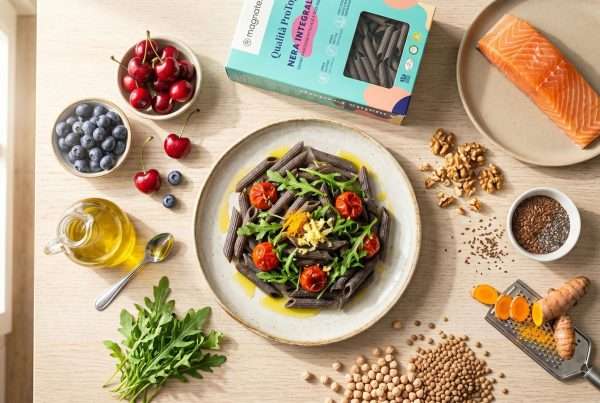
2. Chickpea Noodles with Arugula Pesto and Vegetable “Rainbow” (Diversity Focus)
Chickpea noodles offer a fiber and protein base. Blend arugula, flaxseed and EVO oil for a vibrant pesto. Add yellow and red cherry tomatoes, diced zucchini, and sautéed bell pepper strips. In one dish, you will have nourished your gut with at least 7-8 different types of vegetables!
Answers to Your Questions: FAQ on Microbiome and Gluten-Free Diet
Does the gluten-free diet always damage the gut?
No, it does not “damage” the gut, especially if it is a medical necessity as in celiac disease. However, it can alter the balance of the microbiome if it is not well planned. A gluten-free diet high in ultra-processed foods and low in fiber is problematic, not gluten-free itself.
How can I increase good bacteria if I have celiac disease?
The strategy is the same: focus on a wide variety of plant foods. Include legumes, seeds, nuts, fruits and vegetables of all colors. Choose gluten-free whole grains such as quinoa, millet, amaranth and buckwheat. Supplementing fermented foods and choosing high-fiber products, such as our legume pasta, makes a big difference.
Is Magnatera legume paste suitable for improving the microbiome?
Absolutely. It is one of the simplest and most effective tools. Legume flours are naturally loaded with prebiotic fiber and protein, two key macronutrients for gut and overall health. It’s a way to transform a pasta dish from a simple source of carbohydrates to a functional meal for your gut.
Should I take probiotic supplements?
Supplements can be helpful in specific situations (e.g., after antibiotic therapy), but the best strategy is always “food first.” A healthy microbiome is built at the table, day after day. Before taking any supplements, it is essential to consult your doctor or a nutritionist.
The Future of the Gluten-Free Diet is on Your Plate
Science has delivered a clear message to us: to thrive on a gluten-free diet, we need to look beyond the “Gluten Free” label and focus on the quality and variety of what we eat. The goal is not just to avoid gluten, but to actively build a strong and resilient gut ecosystem.
Focusing on prebiotic fiber, fermented foods and a colorful diversity of plants will transform your diet from restrictive to empowering. The small changes you make today, such as choosing a fiber-rich pasta or adding a new vegetable to your cart, are direct investments in your long-term health.
Your well-being starts from within. Are you ready to nourish your microbiome?
Start your journey to a happier gut today.
Discover our full line of legume, buckwheat and alternative grain pastas at www.magnatera.com and taste the difference a pure, natural ingredient can make.