Gluten-Free Pasta: Not Just for Celiacs.
Trends for 360° Wellness
Have you ever wondered if gluten-free pasta is a choice reserved only for those with celiac disease or gluten sensitivity? The answer, once taken for granted, is surprisingly different today. The “gluten-free” universe has transcended the boundaries of medical necessity to become a true lifestyle, chosen by an increasingly large and aware public. Are gluten-free pasta and gluten-free products only good for those with celiac disease and intolerance? Absolutely not. And the trends confirm this.
In this article, we will look at who is choosing a gluten-free diet today and why. We will explore the trends shaping the market, from the needs of athletes to those simply looking to live and feel better. Get ready to dispel old myths and discover how a high-quality product, such as Magnatera pasta, can become a valuable ally for the well-being of everyone, not just those who must avoid gluten for health reasons.
Beyond Celiac Disease: Who Chooses Gluten-Free?
The gluten-free consumer is a complex and multifaceted profile. While once the sketch was clear-people diagnosed with celiac disease-now the audience has expanded exponentially, embracing new needs and motivations.
Let’s see together who are the new players in this food revolution.
The Sportsmen: Clean Energy for Performance
Professional and amateur athletes are increasingly attracted to gluten-free products, and pasta is at the top of the list.
Why? The main reason lies in digestion. A meal of high-quality gluten-free pasta, especially when formulated with whole-grain flours, is often lighter and more digestible.
This translates into:
- Less heavy feeling: allows training without the gastrointestinal discomfort that some athletes complain of after consuming gluten.
- Reducing inflammation: some studies suggest that a low-gluten diet may help reduce levels of systemic inflammation, promoting muscle recovery.
- Slow-release energy: pastas made from legumes (such as lentils or peas) or buckwheat, such as those offered by Magnatera, offer an excellent complex carbohydrate and protein profile, providing sustained energy and muscle support.
For an athlete, choosing a gluten-free pasta is not an avoidance, but a strategic choice to optimize performance and recovery.
Wellness Seekers: Eating to Live Better
This is perhaps the fastest growing group. “Wellness seekers” are informed consumers who pay attention to the quality of ingredients and the impact food has on their overall well-being.
They don’t necessarily have an intolerance, but they choose gluten-free as part of a holistic approach to health because of how they feel listening to their bodies after they eat.
Their main motivations include:
- Digestive comfort: many people report a reduction in bloating, heaviness, and post-lunch drowsiness by eliminating or reducing gluten.
- “Clean Label” research: these consumers read labels carefully. They look for products like Magnatera pasta, free of additives, emulsifiers, dyes and added sugars. “Gluten-free” becomes synonymous with “natural” and “wholesome.”
- Nutritional variety: exploring alternative flours (quinoa, amaranth, teff, buckwheat) allows people to introduce a wider range of nutrients, fiber and minerals into their diet, overcoming the monotony of wheat.
For them, gluten-free pasta is not a cure, but a tool to feel more energetic, light and fit every day.
Wheat intolerant and beyond
It is crucial to make an often overlooked distinction: wheat intolerance is not the same as celiac disease. Some people react negatively to specific wheat proteins (other than gluten) or fructans (a type of carbohydrate). In these cases, gluten-free products, which by definition exclude wheat, are the ideal solution.
In addition, those suffering from irritable bowel syndrome (IBS) or lactose sensitivity often find benefit in a gluten-reduced diet. An inflamed gut can struggle to digest multiple substances at once; reducing the gluten load can therefore provide relief and improve overall symptoms.
Gluten-Free Market Trends
The future of gluten-free is not just “absence of,” but “presence of”: presence of taste, nutrients and innovation. The trends outline a mature market, one that is all about quality and functionality.
The Rise of Alternative Flours: Taste, Color and Nutrition
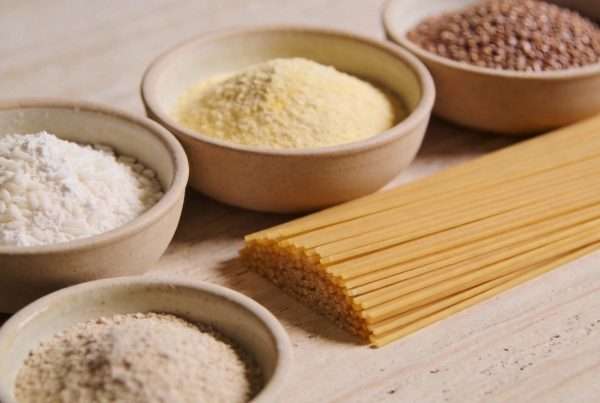
If the first gluten-free products were often tasteless and based on a monotonous mix of corn and rice often, even today, held together with the help of additives; today the scenario is a riot of creativity! Among the offerings from the most knowledgeable and market-conscious companies are an explosion of innovative recipes that take advantage of the unique properties of different raw materials.
- Legume Pastes (lentils, chickpeas, peas): Rich in protein and fiber, they are perfect for athletes, vegans and those seeking a balanced one-pot meal.
- Pastas with Ancient Grains (buckwheat, quinoa, oats): They offer a superior nutritional profile, a more rustic and assertive taste, and a low glycemic index. Magnatera’s “Black Whole Grain” buckwheat and black rice pasta, for example, is packed with fiber and minerals.
- “Functional” Pastas with Superfoods: Pastas (and other products) enriched with functional ingredients such as seeds (e.g., flaxseed, and antioxidant-rich sunflower seeds), spices (ginger and pepper, with anti-inflammatory properties) or herbs/essential oils are increasingly popular. Food is no longer just nutrition, but an active wellness tool.
Transparency and “Clean Label”: the Imperative of Simplicity
Today’s consumers are skeptical and informed, no longer content with the words “gluten-free” on the package, but want to know what’s inside the product. The demand for “clean,” short and understandable labels; clear and proven nutritional claims; clear label statements such as “WITHOUT ADDITIVES” are now unstoppable demands.
This means:
- No to artificial ingredients: thickeners, emulsifiers (such as mono- and diglycerides of fatty acids), flavorings, and dyes are increasingly less tolerated.
- Yes to recognizable raw materials: water and flour (from corn, rice, legumes, etc.). Transparency is the new frontier of quality.
- Certified origin: the guarantee of Made in Italy, such as that offered by Magnatera with its controlled supply chain and production in the Veneto region, becomes a fundamental added value that communicates tradition, safety and quality.
Taste at the Center of Everything: The End of Compromise
Perhaps the most important trend is the end of the perception of gluten-free as a “punitive” alternative. Thanks to advanced production techniques and balanced recipes, modern gluten-free pasta has nothing to envy from the early days, quite the contrary!
Tightness in cooking, a texture pleasant to the bite and an authentic flavor that goes well with any sauce are now non-negotiable requirements. A product like Magnatera pasta, which comes from a family pasta factory with a deep knowledge of the material, is emblematic of this evolution: the pleasure of Italian pasta, accessible to all and attentive to modern needs.
Frequently Asked Questions (FAQs): Everything You Need to Know about the Gluten-Free World.
We answer some of the most frequently searched questions online to provide clarity once and for all.
What are the benefits of eating gluten-free if I am not celiac?
For non-celiac but sensitive people, benefits include improved digestion, reduced abdominal bloating, increased energy, and an overall feeling of lightness. For everyone else, it can be a way to vary one’s diet and discover new flavors and nutrients from alternative flours.
Does gluten-free eating make you lose weight?
Not automatically. Weight loss depends on the total calorie balance and the overall quality of the diet. A gluten-free product full of sugar and fat will not make you slim. However, choosing gluten-free pastas made from legumes or buckwheat, which are rich in fiber and protein, can increase satiety and help control appetite.
How do you recognize good gluten-free pasta?
From the same indicators as a good traditional pasta!
- Ingredients: few and natural. Water and flour should be the main characters.
- Tightness in cooking: should not darken or become sticky. The pasta should remain “al dente.”
- Taste: it must have a pleasant taste that does not just taste like starch, and it must bind well with the seasoning.
- Roughness: a porous surface, given by bronze drawing, holds the sauce better, just as Magnatera does.
- Slow: small batches, slow drying at low temperatures to preserve the best of taste and nutrients.
Who eats gluten-free? A quick summary.
They will eat gluten-free: celiacs, gluten-sensitive people, athletes, wellness-conscious people, families looking for natural products for their children, vegans and vegetarians, people with wheat intolerance or IBS, anyone curious to explore new horizons of taste, anyone interested in leading a varied diet for their well-being.
Inclusive and Tasty Future
Looking even further ahead, predictions suggest that the line between “food for celiacs” and “food for all” will become increasingly thin. Gluten-free will stop being a label of exclusion and become a symbol of inclusivity, quality, and innovation embraced across the board.
We expect even greater customization, with products designed for specific needs (e.g., pasta for sports recovery, pasta for gut health) and an increasingly strong presence on restaurant menus and in large retailers. The future, is of a market that embraces nutritional diversity and the pleasure of the table, without compromise.
Your Gluten-Free Taste Journey Begins Now
We have seen how the answer to the question “is gluten-free pasta only good for celiacs?” is a resounding no. The world of gluten-free today is a vibrant universe, chosen by sportsmen, health enthusiasts and foodies for its inherent qualities: digestibility, nutritional variety and clean ingredients.
It is no longer a matter of giving up, but a conscious choice towards a more varied, natural and tasty diet. Brands like Magnatera are the pioneers of this revolution, proving that it is possible to combine Italian pasta-making tradition with raw material innovation, creating an exceptional product for all palates.
Are you ready to discover a new world of taste and wellness? Explore our full range of gluten-free pasta, 100% Made in Italy, natural and incredibly good.
Visit magnatera.com and be surprised.
Your journey to more conscious and tasty eating begins today.